



Thomas Gaultier
Menu

Mediation and social performance

Community mediation for mining, oil and gas, and energy projects

Companies call me when a social licence is coming apart or land access has been stalled for eighteen months. Communities call me when they are being asked to negotiate their future against a team that has been preparing for years. I work in the room where the tension is real and the margin for error is zero.

Thomas Gaultier presenting on risk analysis at a mediation conference hosted by the Turkish Ministry of Justice
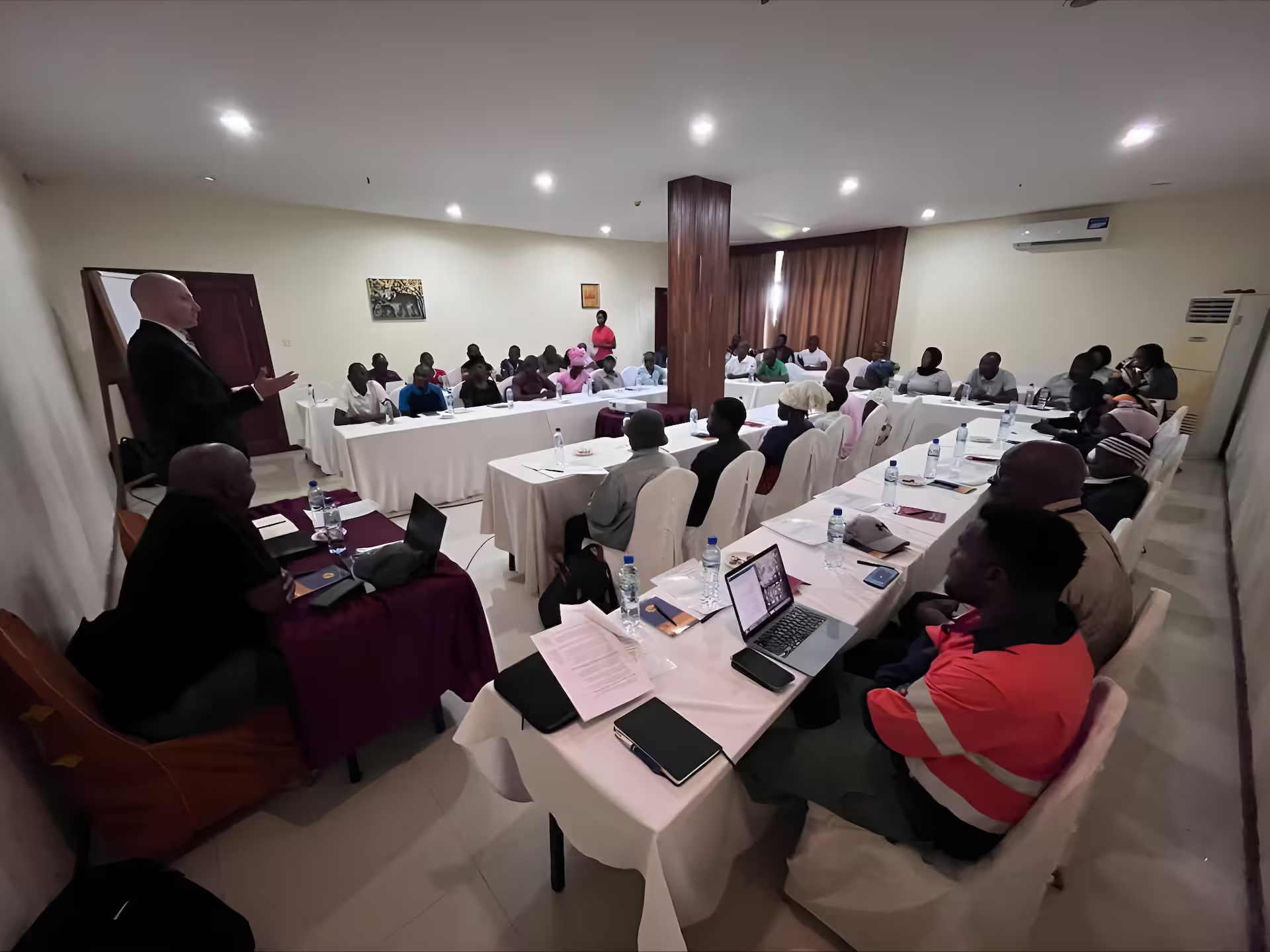
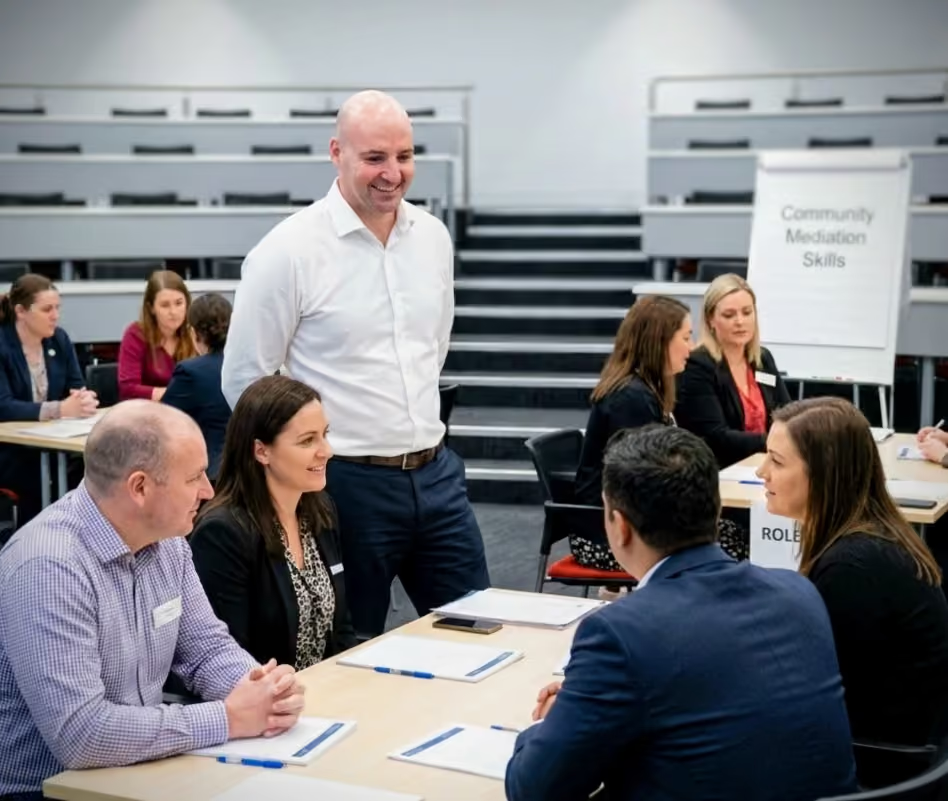
Thomas Gaultier facilitating a working session with community members and site workers

Boardrooms and village halls. Same method, different room.

2,000+
community claims resolved
15+
years in the field
5
books published
4
working languages

Retained by Gemfields Group on an ongoing basis for mediation advice, support and training across its mining operations.

Your community strategy is your most expensive blind spot

Resource projects need community support. Communities need a process they can trust.

Research from the IFC and the World Bank puts the cost of community conflict at 50 to 70 percent of a project’s net present value. On a project valued at 341 million dollars, that is more than 200 million lost. Not to geology. Not to engineering. To broken relationships.

What the company is dealing with

  • Delays from unresolved stakeholder conflict cost millions a month.
  • Permits increasingly turn on demonstrable, documented engagement.
  • Social licence requires genuine consultation, not a performance of it.
  • Multi-party disputes involve competing interests that are all legitimate.

What the community is dealing with

  • Power imbalances make meaningful participation difficult.
  • Technical complexity creates deep information asymmetry.
  • Past broken promises produce entirely justified scepticism.
  • People need a process that respects rights and still enables dialogue.

Standard consultation fails because it treats engagement as a compliance exercise. The cost of having no real process is always higher than the cost of building one.

The method

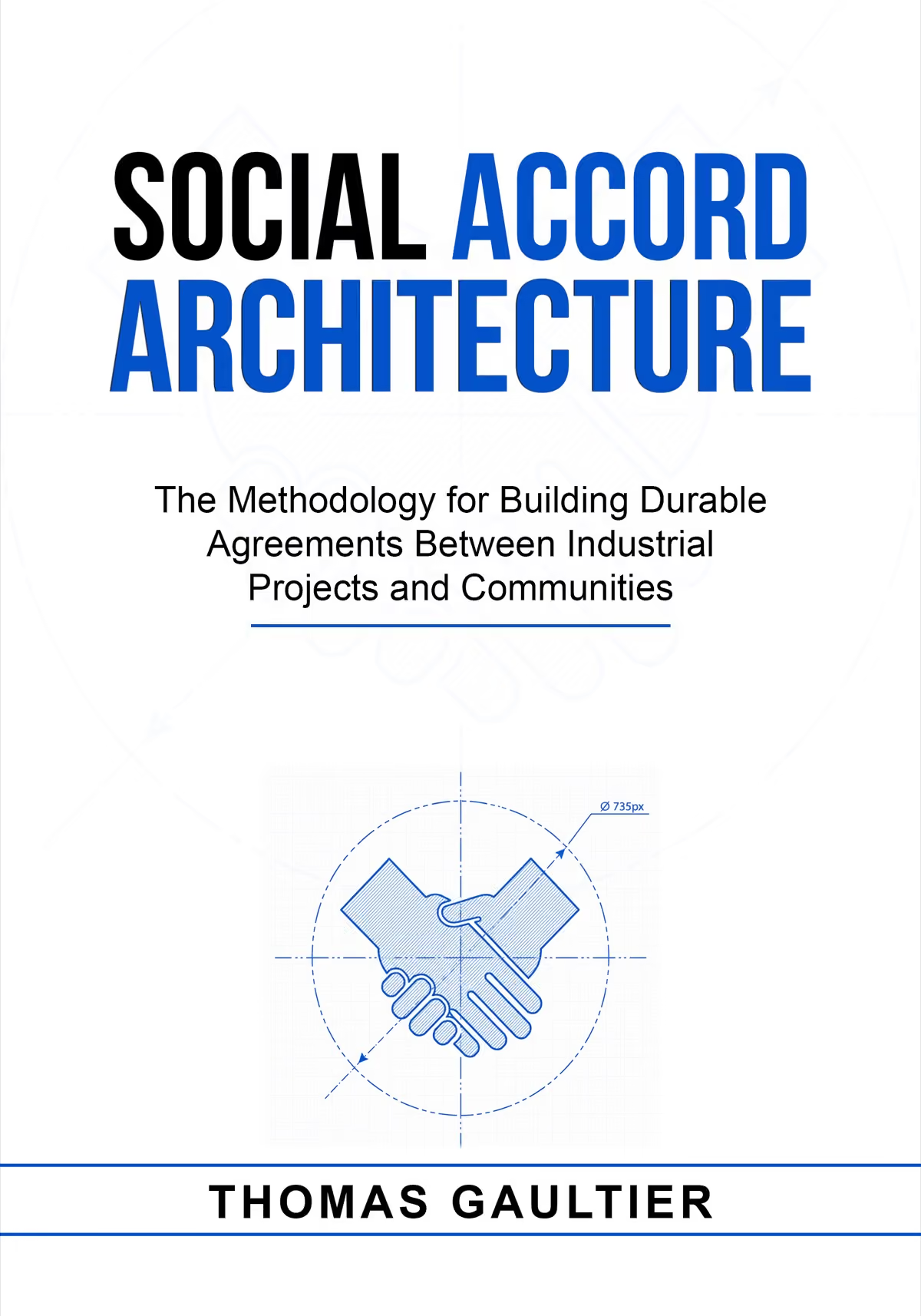
Social Accord Architecture

The relationship between a project and the people living on top of it is infrastructure. It bears load, it decays without maintenance, and, the part almost nobody acts on, it can be deliberately built. Social Accord Architecture is the discipline I built to do that, and it runs across the whole project lifecycle rather than arriving with the first protest.

It came out of practice, not a seminar. Two thousand grievance claims in Mozambique, land access negotiations on a lithium project in Portugal, and fifteen years of mandates where the relationship between a company and a community decided whether the project moved.

Five principles

The constitution of the discipline. Architecture over improvisation, dual accountability, lifecycle integration, trauma awareness, professional distinction. Each one is a scar with a rule attached.

Four phases

Diagnostic mapping, blueprinting, assembly, then stewardship across the decades a project runs. Pre-feasibility to closure, not first protest to settlement.

Two pathways for when prevention does not hold

GROUNDS for a standard dispute, REBUILD when real harm sits in the room, and a scored instrument to decide which one a dispute needs before anybody sits down. The contingency inside the architecture, not the whole of it.

Core services

Resolve a live dispute, design the engagement that prevents the next one, or build the capability in your own team

When the dispute is already live

Community mediation

Impartial facilitation between an operator and the communities around it. Land access, compensation, environmental grievances, benefit agreements, and the disputes that have already reached the road or the courts.
Before it becomes a dispute

Advisory

Engagement design for companies: consultation that holds up, grievance mechanisms people use, early warning that reaches decision-makers in time. Negotiation support for communities: the leverage, the mandate, and what the agreement on the table will mean in ten years.

When your team carries it

Training

Field-tested mediation and negotiation training for community relations teams, social performance functions, and the mediators who want to specialise in this sector.

Thomas played a crucial role in ensuring agreement was reached during discussions between MRM and community leaders and representatives. Since these discreet engagements, Thomas has been retained by Gemfields on an ongoing basis to provide mediation advice, support and training. Thomas has proven to be a skilled mediator and trainer.

Gemfields GroupMontepuez Ruby Mining, Mozambique

The library

Five books, four audiences, one method

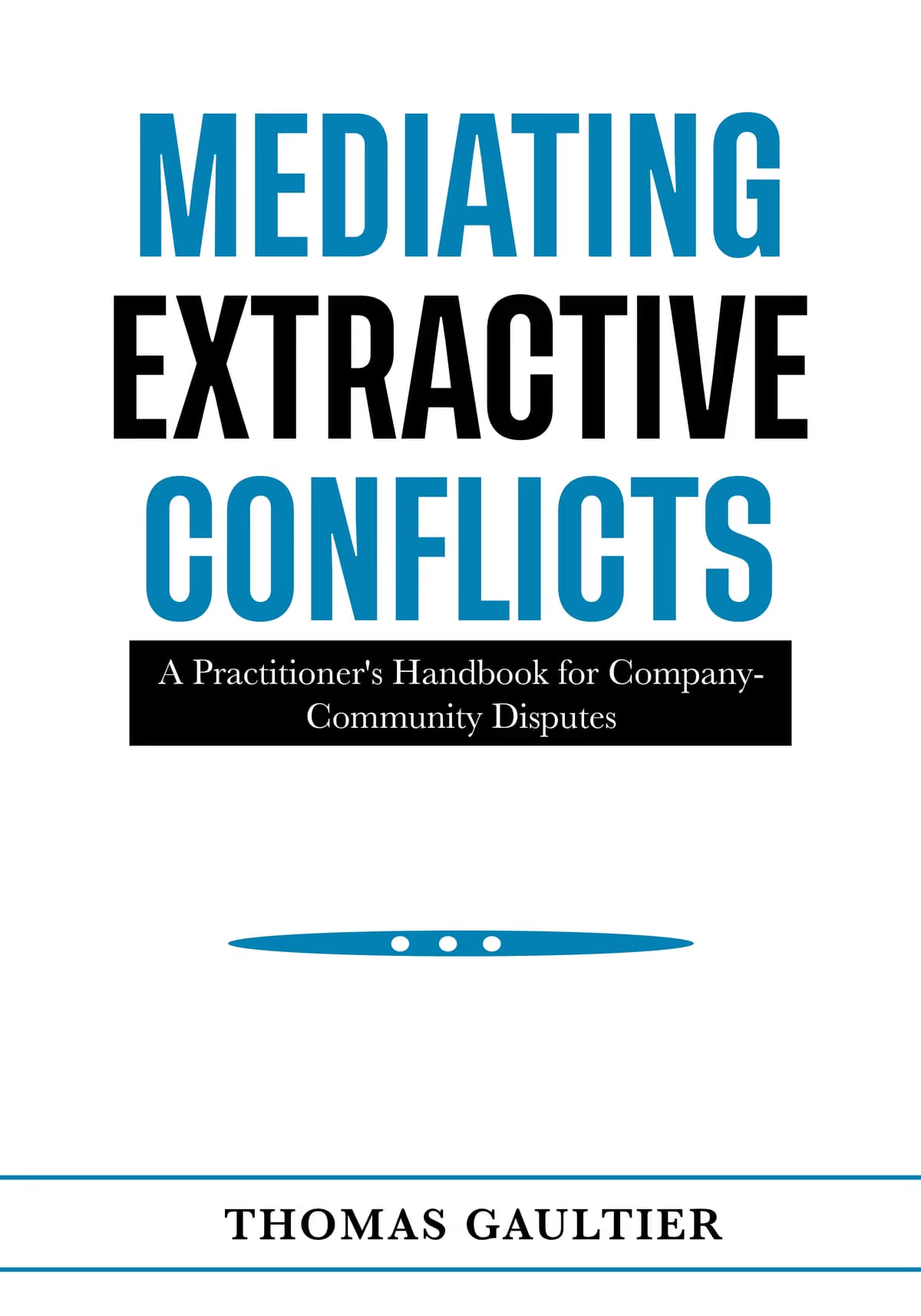
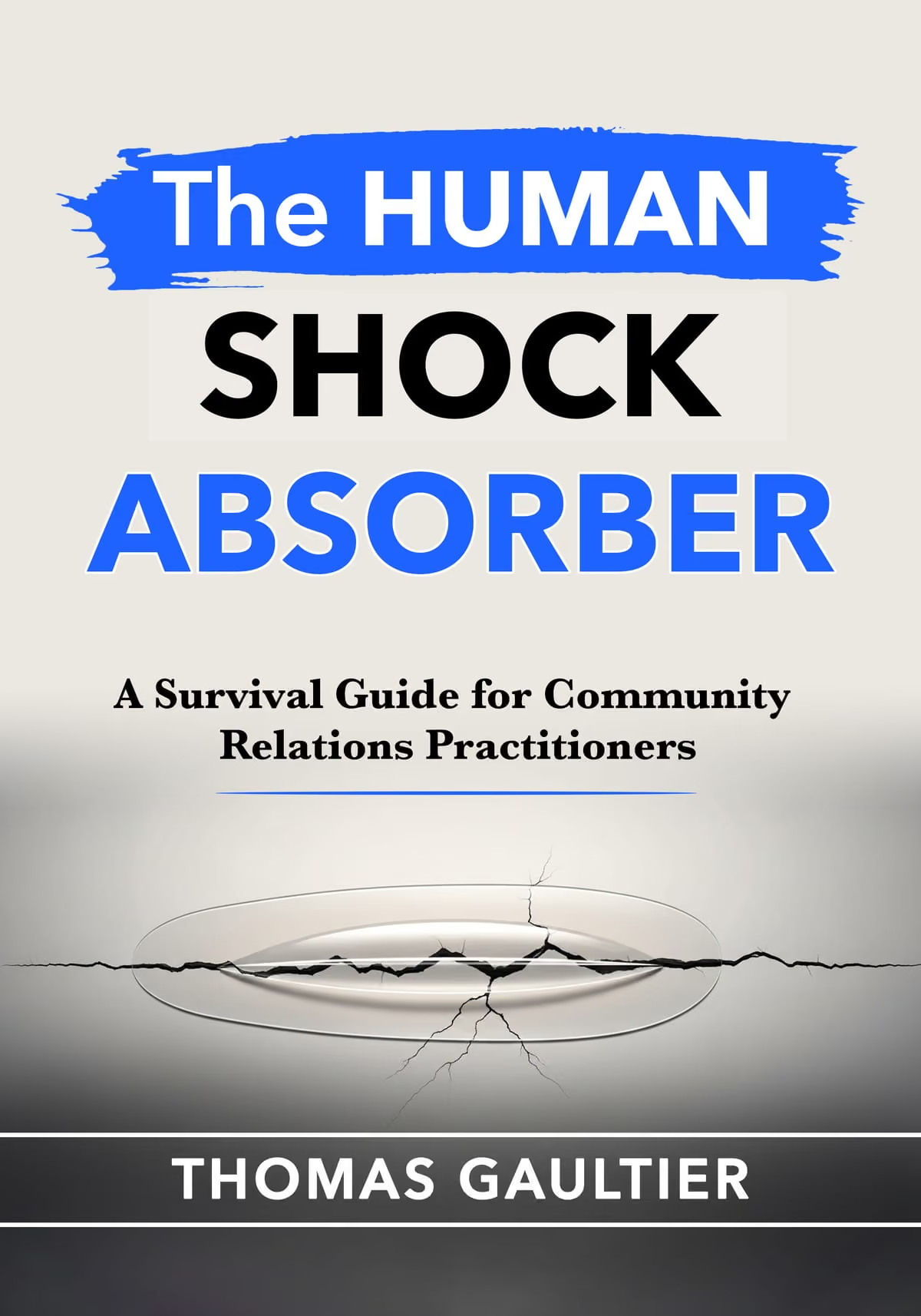
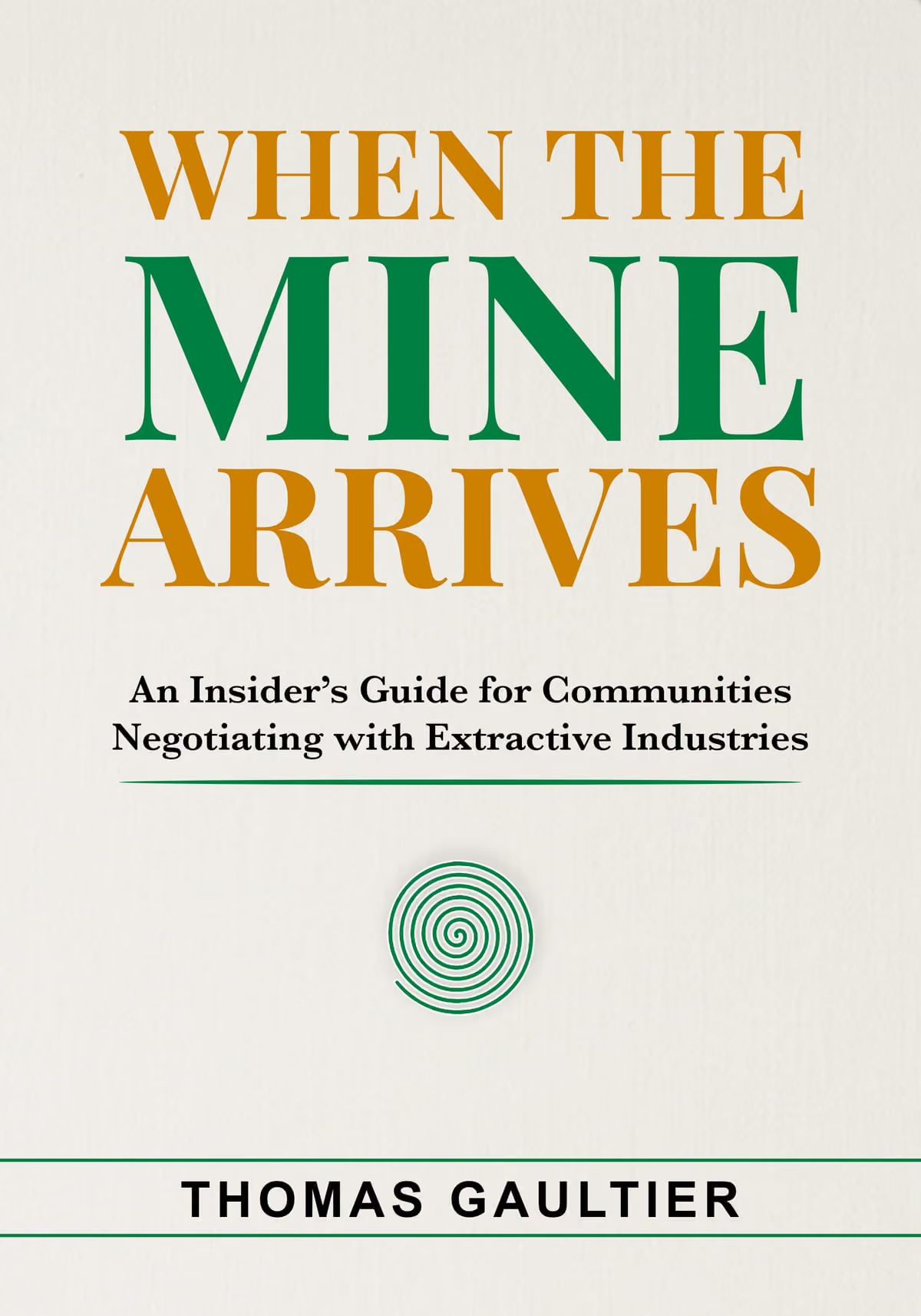
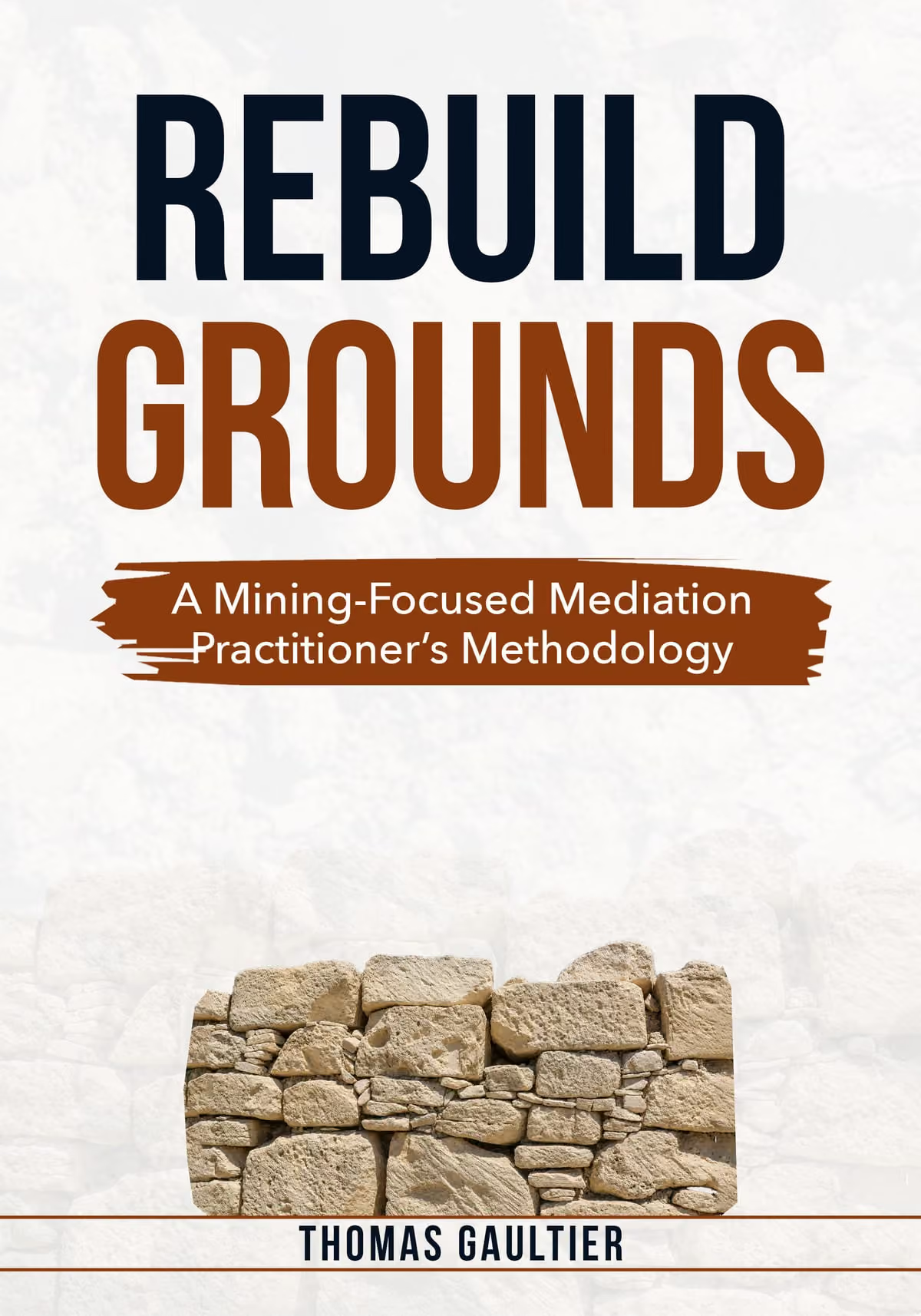
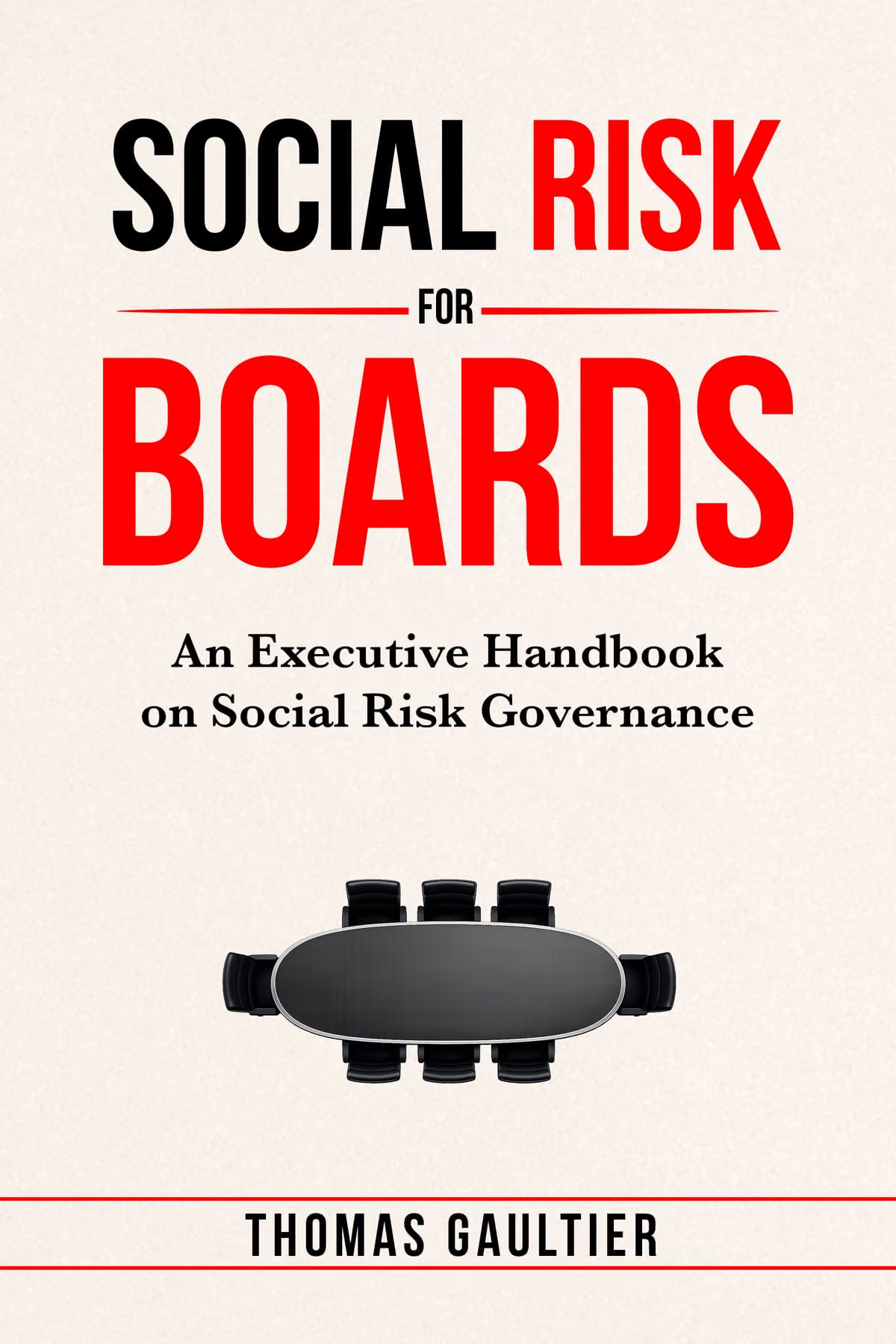
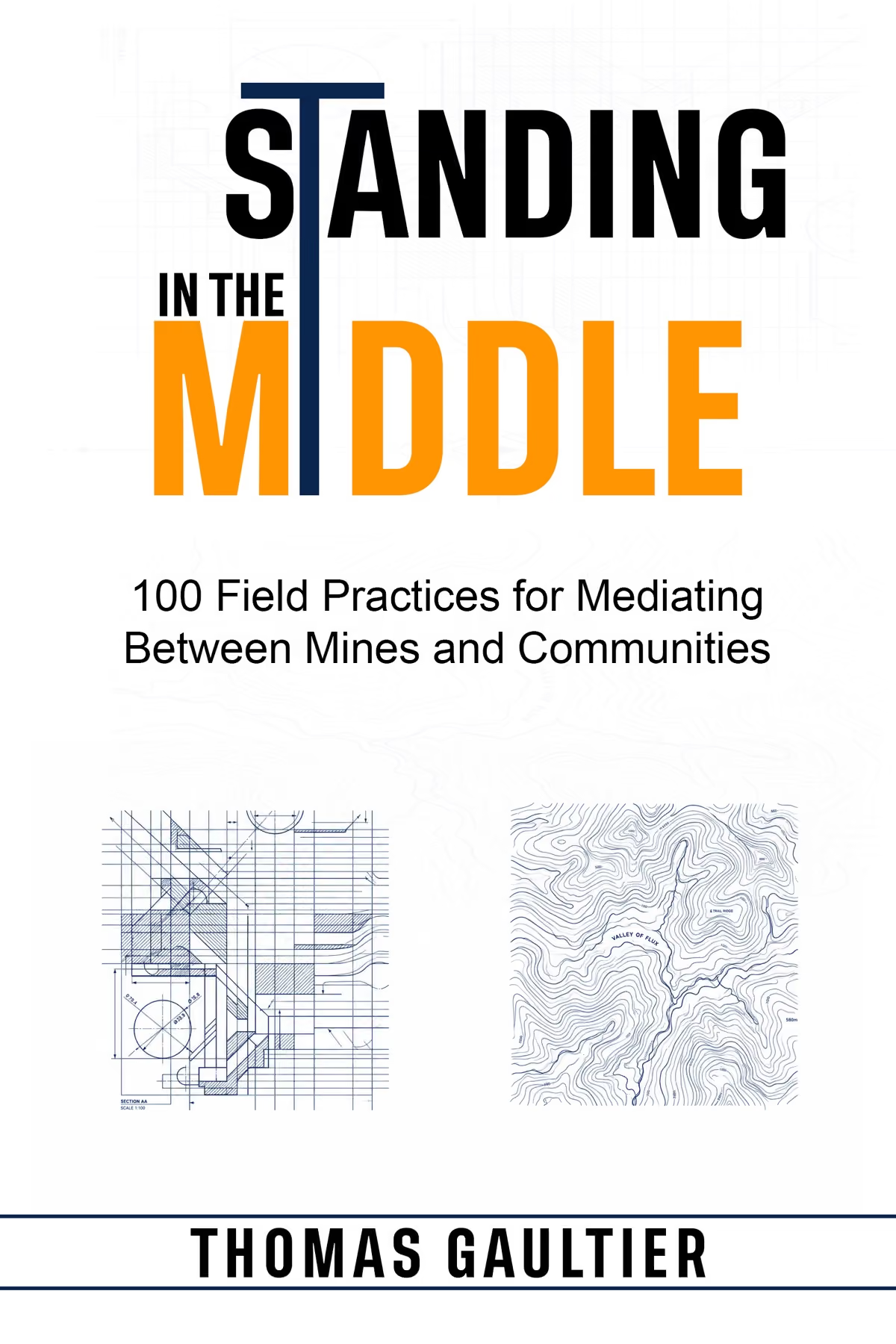
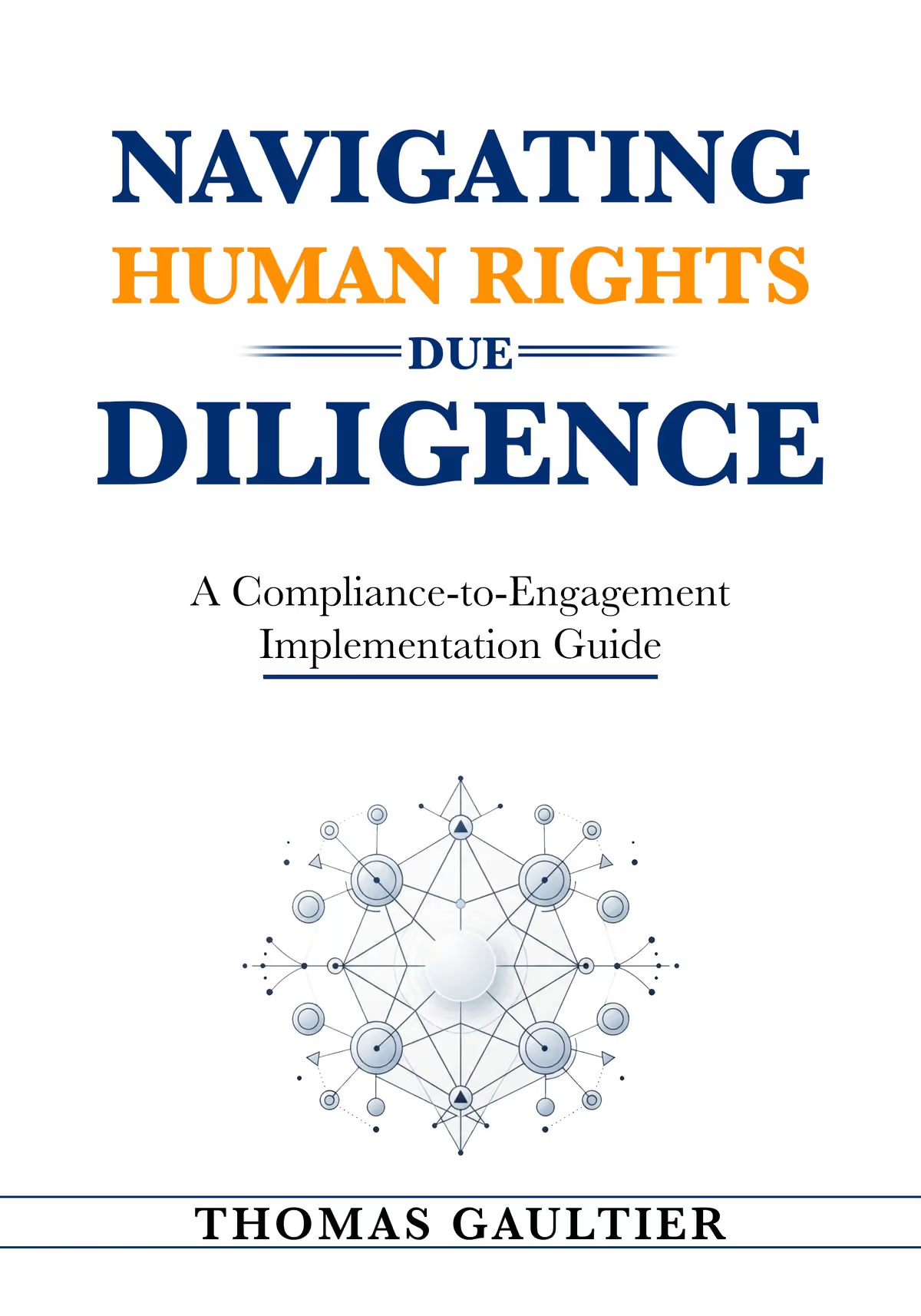
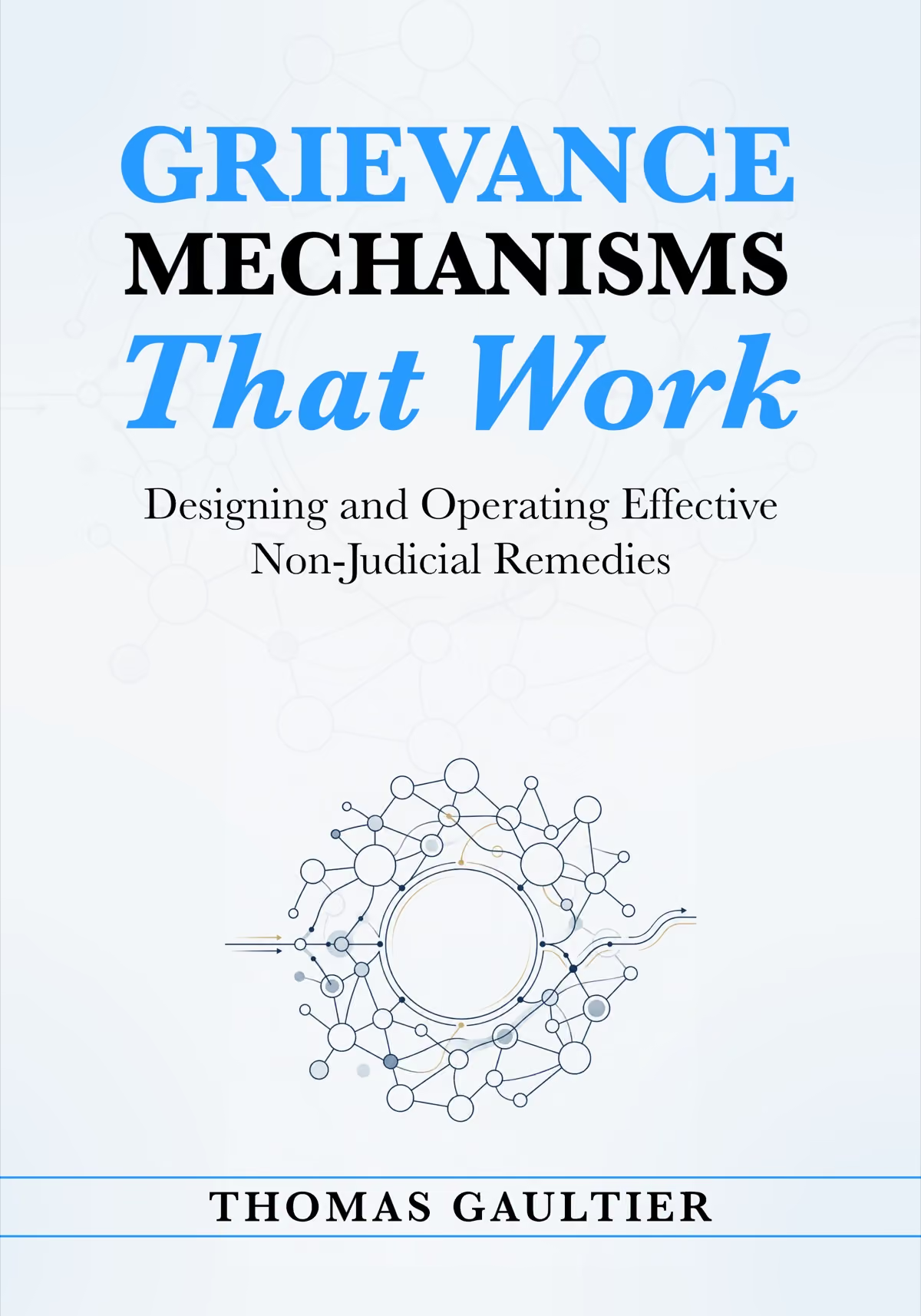
Each volume writes the same discipline for a different side of the table: the mediator, the practitioner absorbing the pressure, the community negotiating its future, and the board that signs off.

All books

Free tools

Find out where you actually stand

Three diagnostics and a live tension map, built from the same frameworks I use on mandate. They take a few minutes and they will tell you something you can act on this week.

Community tension map

Updated 25 July 2026

67
projects tracked
30
at high or severe tension
16
regions

What the friction is about

  • Environmental & water21
  • FPIC & consent11
  • Compensation & benefit-sharing9
  • Land access & resettlement8
  • Protest & blockade7

Compiled from public reporting and refreshed every Monday. A high count means several sources are reporting friction, not that a company has done something wrong.

A serious game

The Accord Game

A business game in the sense a business school means it, built for what happens between a project and the people living next to it. Half the room runs a contested lithium project. The other half lives beside it. Both face the same five crises, neither can see the other’s reasoning, and every world ends somewhere different.

You can tell a room that one side holds the money, the information and the clock. Nobody disagrees, and nothing changes on Monday. Hand someone the weaker chair for a morning and it changes.

Up to 56 players

Four worlds, two tables to a world, seven characters to a table. It scales down to one table, and to one person.

Four rooms

Solo online, university and executive cohorts, conference programmes, and inside a company.

From the field

The field teaches what the textbook cannot

All articles

Who does this work

Not a generalist. Not an academic. A field practitioner.

I have mediated more than 2,000 community and historic claims across Sub-Saharan Africa, negotiated land access for a lithium operation in Portugal, and spent fifteen years resolving the conflicts in this industry that generalists cannot reach.

I co-founded the ICFML, the certification body for Portuguese-speaking mediators, and I teach negotiation and mediation at the Universidade Católica Portuguesa. I am admitted to the New York Bar and hold an LL.M. in Alternative Dispute Resolution and an MBA in Mining and Raw Materials. The credentials matter less than the mandates. The work is hands-on, confidential and ongoing.

Thomas demonstrates an incredible capacity of active listening and always finds new topics to learn and share; he has a continuous curiosity about the world and a true commitment and care for people that work with him.

Ana Maria Maia GonçalvesFounder, ICFML

Thomas is a multi-skilled, energetic and well qualified Dispute Resolution practitioner who is dedicated to building the commitment of Portuguese lawyers to non-adjudicative Dispute Resolution. He is a pioneer in his field and a privilege to work with.

Rosemary HowellConflict resolution expert, Professorial Fellow

If the relationship around a project is under pressure, or heading there, let us talk.

A 30-minute call is enough for me to understand the situation and tell you honestly whether I can help. Active opposition, a social licence problem, an FPIC process that needs an independent facilitator, a negotiation a community has to prepare for, or a conflict that is not public yet but will be. It makes no difference which side of the table you are on. No obligation, no generalist pitch.

Every first conversation is confidential.