Thomas Gaultier
Menu

Training

Training for the people who hold the relationship

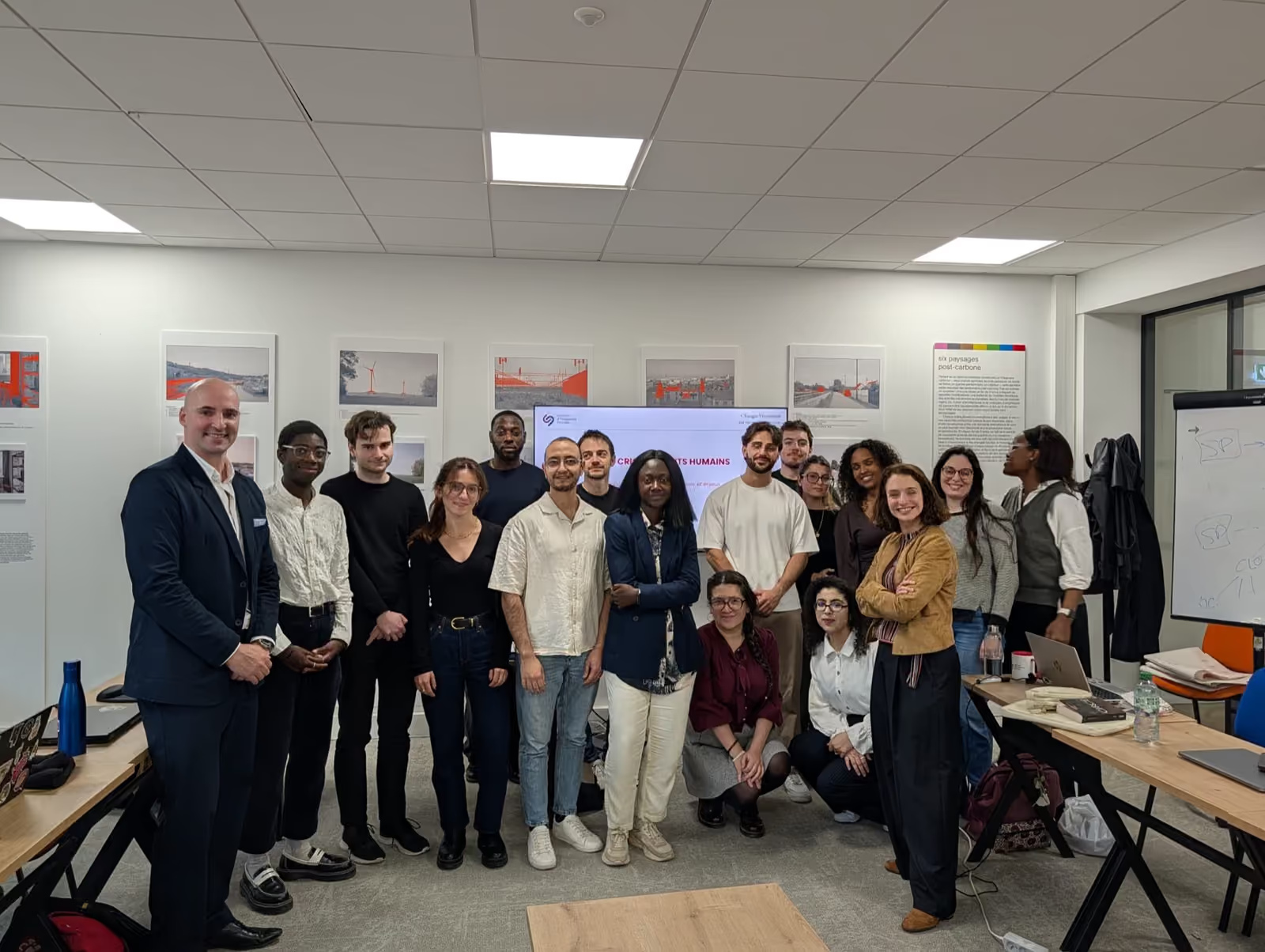
More than 500 professionals trained. Not lecture theatre material: the difficult conversation, run badly, then run again properly, with the specific issues your team is carrying this quarter.

Why it is built this way

People do not learn this from slides

Every community relations officer I have trained already knew the theory. What they could not do was hold a room when an elder started shouting, or say no to a demand without ending the relationship, or keep their own composure when they privately agreed with the person across the table.

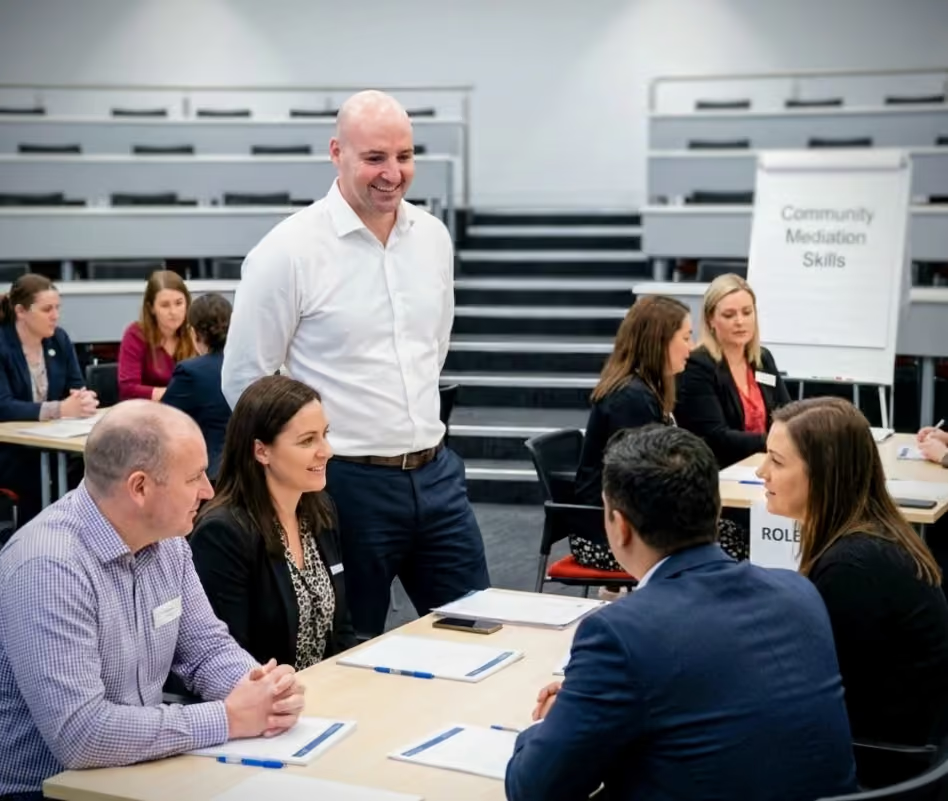
So the sessions run on practice. Short input, then rehearsal, then the part people find uncomfortable: doing it again after being told exactly what did not work. Half the material comes from your own grievance log, which is also how I find out what is really happening on the site.

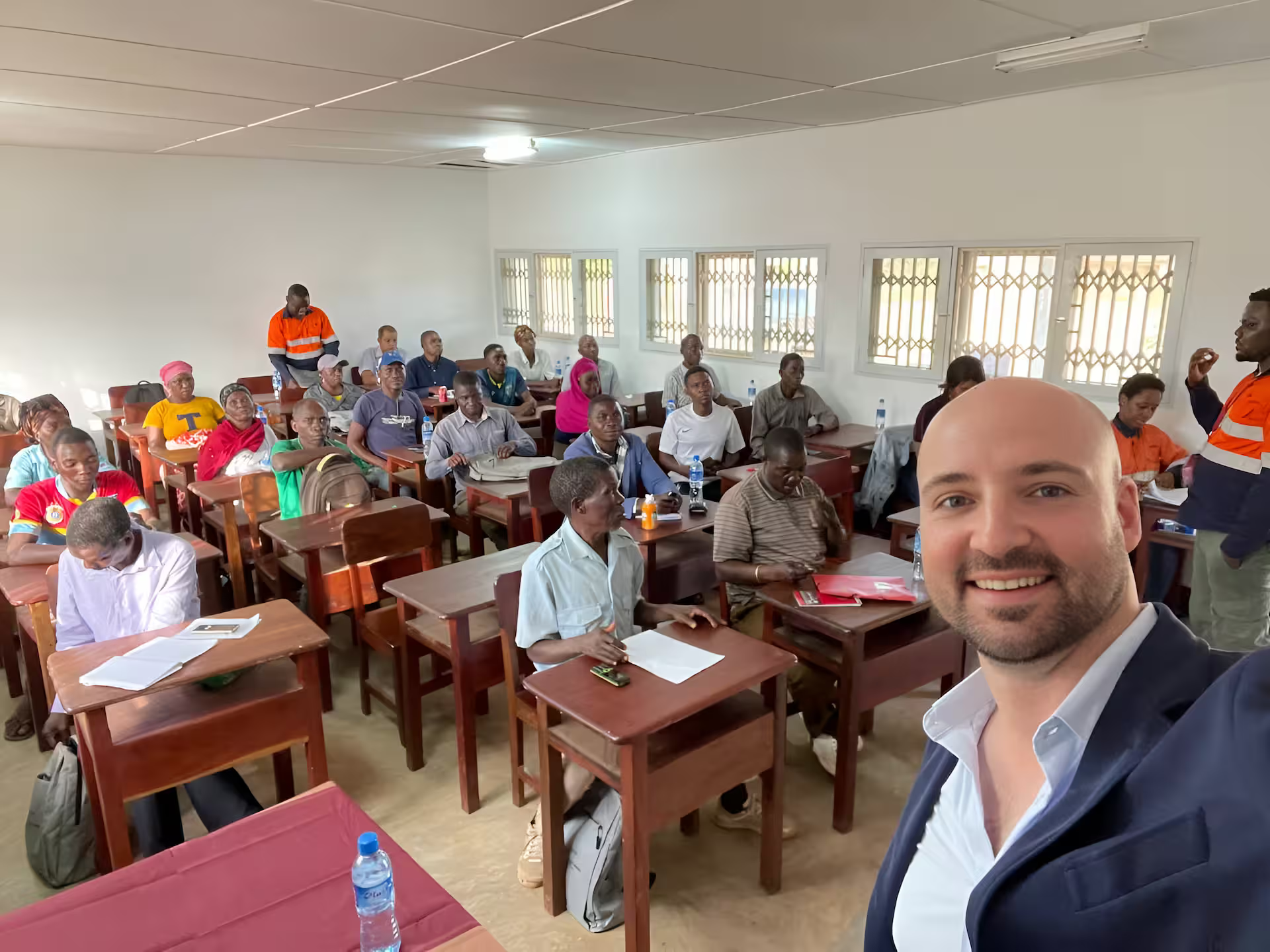
A training session in progress with community participants and site personnel

Programmes

Four formats, chosen by who is in the room

Community relations and social performance teams

The core programme. Difficult conversations without escalation, interest-based negotiation, grievance handling, de-escalation, and the self-management that keeps people in this job for more than three years. Built around your operation, your live issues and your actual grievance log.

Two to four days, on site

Mediators entering the sector

For experienced mediators who want to work in extractive and infrastructure disputes. Power asymmetry as the central dynamic, FPIC and consent processes, trauma-informed practice, and the selection judgment that decides which process a dispute needs.

Workshop or seminar series

Executives and boards

A short, direct session on what social risk costs, what the board should be asking management, and what the reporting has to contain to be worth reading. No operational detail. Line of sight.

Half day

The Accord Game, facilitated

Half the room runs a contested lithium project, half lives beside it, and five rounds of decisions compound into three or four different endings to the same story. Participants find out what their own instincts cost, then see it charted against every other table. This is the session people still talk about a year later.

Six hours to six weeks, up to 56 players

The simulation

The Accord Game

Two tables, one world. The room splits into parallel worlds, each pairing a company table with a community table on the same contested lithium project. They share one trust index, one grievance backlog and one river, and they never negotiate face to face in an ordinary round.

Five events hit every world identically: an expansion, a 40 percent price crash, a spill, a change of owner, a blockade. Only the decisions differ. The debrief lays each world’s trust curve over what that world believed was happening, and runs the counterfactuals.

Up to 56 players, in English, French, Portuguese or Spanish. Six hours in one block, or one round a week across a five to six week module. It also runs solo online.

Also available for practice

  • Standing in the Middle

    A separate, single-player game with its own project and its own cast of six. One person, one chair, about forty minutes. Free, in English and French, and a good pre-read before a facilitated session.

  • Mediating Extractive Conflicts

    The handbook the training is built from, including ready-to-use simulation exercises for teams running their own sessions.

  • The certification course

    An eight-module programme in community mediation, in production now. Join the list to hear when enrolment opens.

Practical questions

In what languages do you train?

English, French, Portuguese and Spanish. Materials for The Accord Game exist in all four. For community-facing sessions I work with local-language facilitators, because a session run through consecutive interpretation loses roughly half of what matters.

Is this certified?

I co-founded the ICFML, the certification body for Portuguese-speaking mediators, and I teach negotiation and mediation at the Universidade Católica Portuguesa and law at Forward College in Lisbon. Corporate programmes are not a certification in themselves. If a formal credential is the goal, tell me at the outset and I will route you appropriately.

Do you use real cases?

Yes, and where the case is a client’s, only with permission and usually with the identifying detail removed. Most of the value comes from working your live issues rather than a generic scenario, so I ask for the grievance log and the last two engagement reports before designing anything.

Where confidentiality does not allow it, the simulation does the same job with an invented project that behaves exactly like a real one.

How many people can attend?

Skills training works best at 8 to 16, because everyone needs to practise rather than watch. Executive sessions are usually 6 to 12. The Accord Game takes up to 56 in a single game and scales down to one table, or to one person playing solo online.

Tell me who needs training and what they are struggling with.

I design each programme around the situations your team is actually facing, so the first conversation is mostly me asking about your last three difficult community meetings.

Every first conversation is confidential.