
Free to play
Standing in the Middle
Over the next thirty minutes, walk in the shoes of different practitioners in a story-led challenge. Test your skills and live the hard decisions this industry makes, in the field and in the boardroom.
Free. English and French. Your progress saves in your own browser.
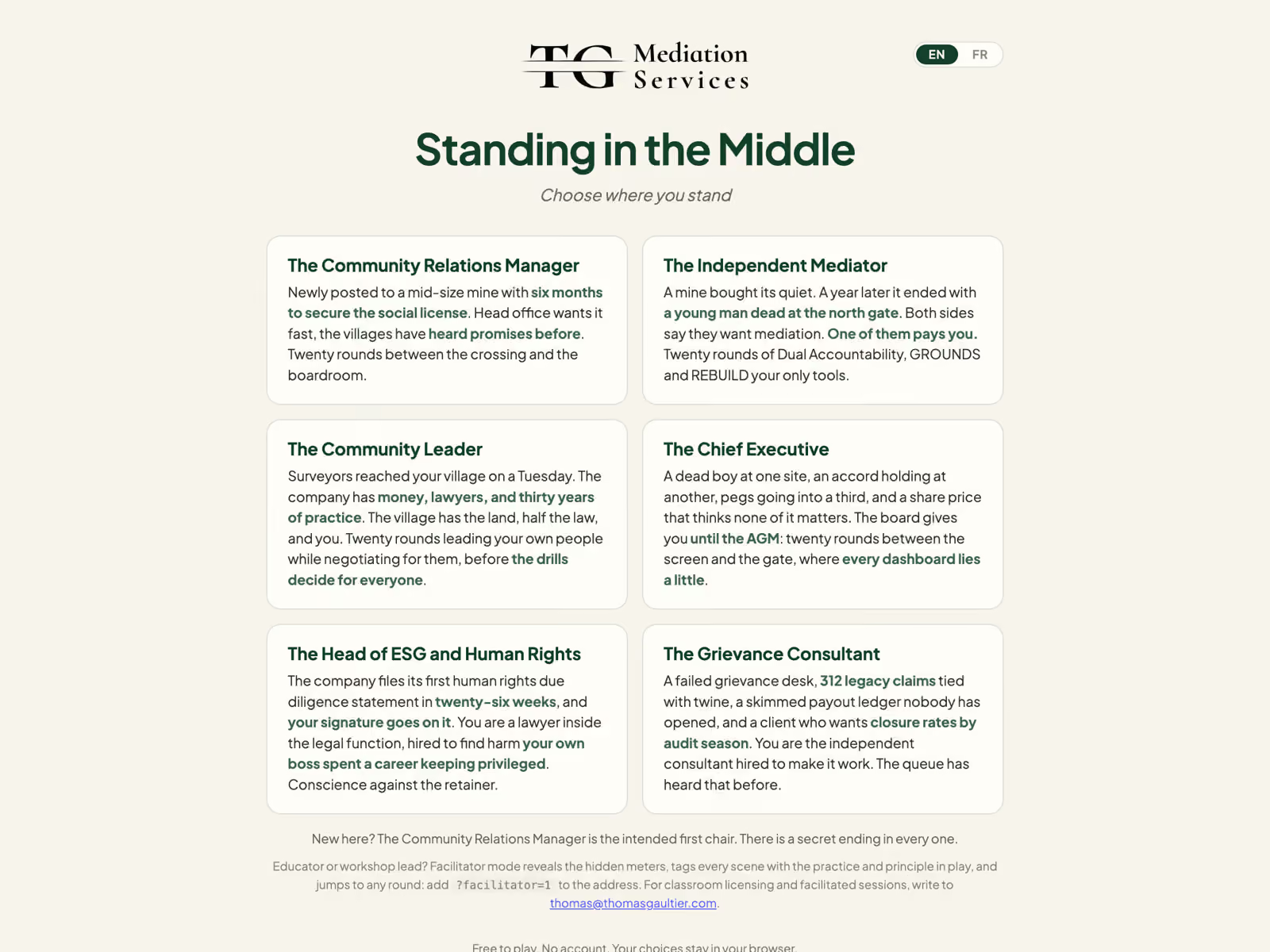
Six roles, one world
Every role is playing the same events from a different chair
Play it twice from opposite sides and the second run is uncomfortable in a way the first is not. That is the entire point of it.
Community relations manager
You carry the relationship and neither side thinks you are on theirs.
Mediator
You hold the process, and the process is all you have.
Community leader
You speak for people who do not agree with each other.
Chief executive
You have a board, a lender and a quarter.
ESG lawyer
You know what is defensible. That is not the same as what is right.
Grievance consultant
You were hired to fix a mechanism that nobody wants fixed.
Why I built it
Every training session I run reaches the same moment: somebody says that the other side is simply being unreasonable. They are usually describing a person who has been given an impossible mandate by someone who will never visit the site.
A game does something a slide cannot. It makes you hold the impossible mandate yourself, run out of good options, and pick the least bad one. Then it shows you what that decision looked like from the other chair.
It is free because I want it used in classrooms and induction programs, not sold.
The game shares its name with a book. Standing in the Middle, the field companion of the library, hands the person in that chair one hundred one-page practices for doing the job for real.
Using it with a group
Assign different roles to different people, give everyone forty minutes, then debrief on where the accounts diverge. It is also the best pre-read I know of before The Accord Game, which is a different game entirely: a serious game for up to 56 players, company and community tables running the same crisis in parallel. People who have played this one arrive already knowing that the other chair has reasons.
Both languages are written for people reading in a second or third language. Most rooms I work in are mixed, and a game people have to decode is one they put down.
If you want the debrief structure I use, ask me and I will send it.
If the relationship around a project is under pressure, or heading there, let us talk.
A 30-minute call is enough for me to understand the situation and tell you honestly whether I can help. Active opposition, a social license problem, an FPIC process that needs an independent facilitator, a negotiation a community has to prepare for, or a conflict that is not public yet but will be. It makes no difference which side of the table you are on. No obligation, no generalist pitch.
Every first conversation is confidential.