
Thomas Gaultier
Menu

Services

Community mediation, stakeholder engagement design, and training for mining, oil and gas, and infrastructure projects

Resolving disputes, designing the engagement systems around them, and preparing either side to negotiate well. Companies and communities both commission this work, and on any one project I hold one role.

Three doors

Resolve what is happening now, design what happens next, or build the capability in-house

Most engagements start at one of these three and move to another. A mediation that works usually exposes the design problem underneath it, and the fix for that is rarely another mediator.

The dispute is already live

Community mediation

Impartial facilitation between an operator and the communities around it, at the moments that decide whether a project continues.

Land access and compensation, environmental grievances, resettlement, benefit agreements, FPIC processes that have stalled, and the disputes that have already reached the access road or the courts. I run the process, not the outcome.

Best for

  • Active disputes that need an independent third party
  • Renegotiation of an agreement that is no longer holding
  • Multi-stakeholder conflicts with government and civil society in the room
  • A last serious attempt before litigation

What comes out of it

Resolved disputes, preserved relationships, avoided litigation cost, agreements that are actually implemented.
Before it becomes a dispute

Advisory

Engagement design for companies, negotiation support for communities. Both sides of the table, never the same dispute.

For an operator: consultation frameworks that survive contact with a real community, grievance mechanisms people trust enough to use, and early warning that reaches decision-makers while there is still room to move. For a community: reading the project, deciding who holds the mandate, preparing for the negotiation, testing what is on the table, and monitoring what was promised.

Best for

  • A community preparing to negotiate with a company that has been preparing for years
  • A benefit agreement, compensation methodology or resettlement plan that needs testing before signature
  • Project planning and permitting phases
  • An audit of engagement that is producing paper and no trust
  • Grievance mechanism design or repair
  • Community relations capacity building on either side

What comes out of it

A community that negotiates from a position it chose rather than one it was handed, and a company with a defensible engagement record and relationships that hold between crises.

Your team carries it

Training

The skills, run as practice rather than slides, for the people who do this every day.

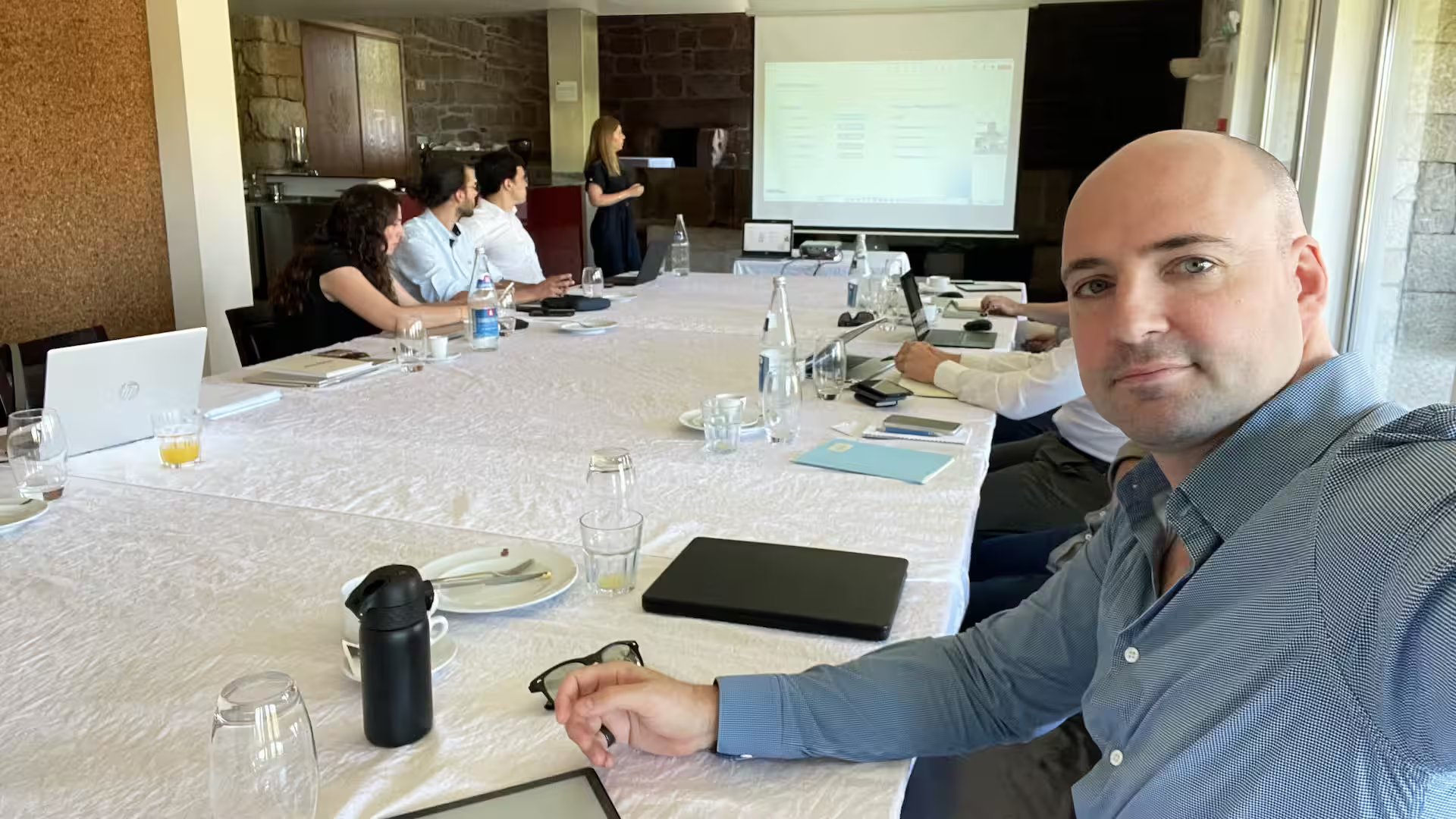
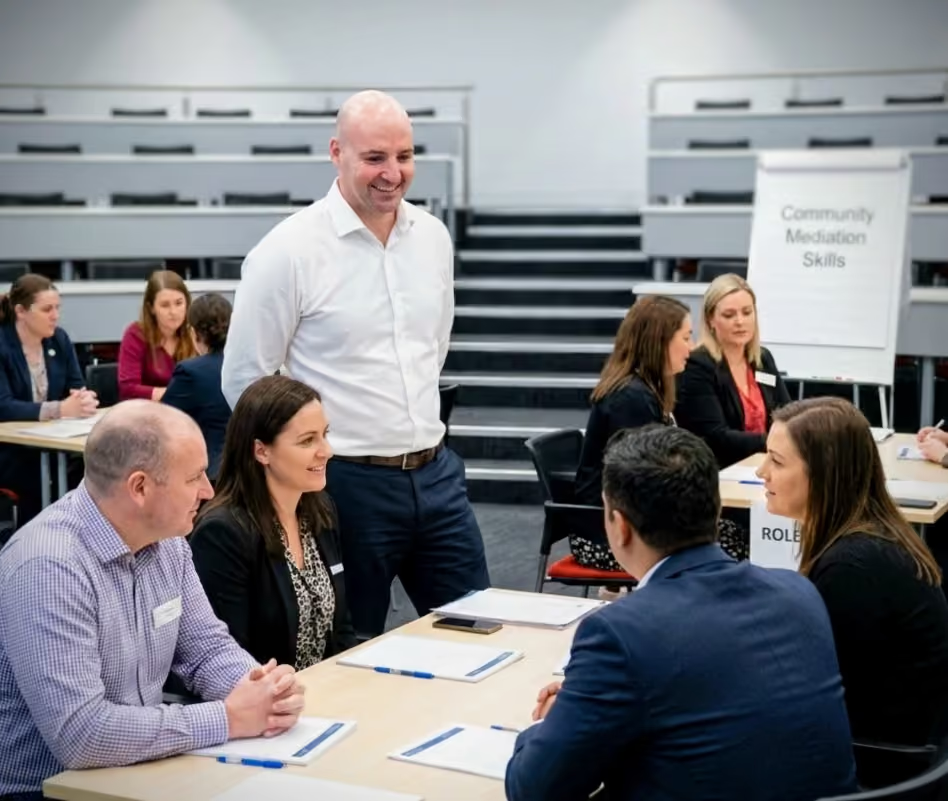
Mediation and negotiation training for community relations and social performance teams, workshops for mediators specialising in this sector, and facilitated simulations where a room negotiates the same agreement under real constraints and sees what its choices cost.

Best for

  • Community relations and social performance teams
  • Grievance mechanism operators
  • Mediators moving into extractive and infrastructure disputes
  • Executive and board sessions on social risk

What comes out of it

A team that can hold a difficult conversation without escalating it, and a shared method instead of individual improvisation.

My approach

All three run on the same method

Whichever door you come through, the work runs on Social Accord Architecture: the discipline I built for designing agreements that survive after everyone goes home. Two mediation frameworks, a scored instrument for choosing between them, and a set of tests that have to be met before a process is allowed to advance.

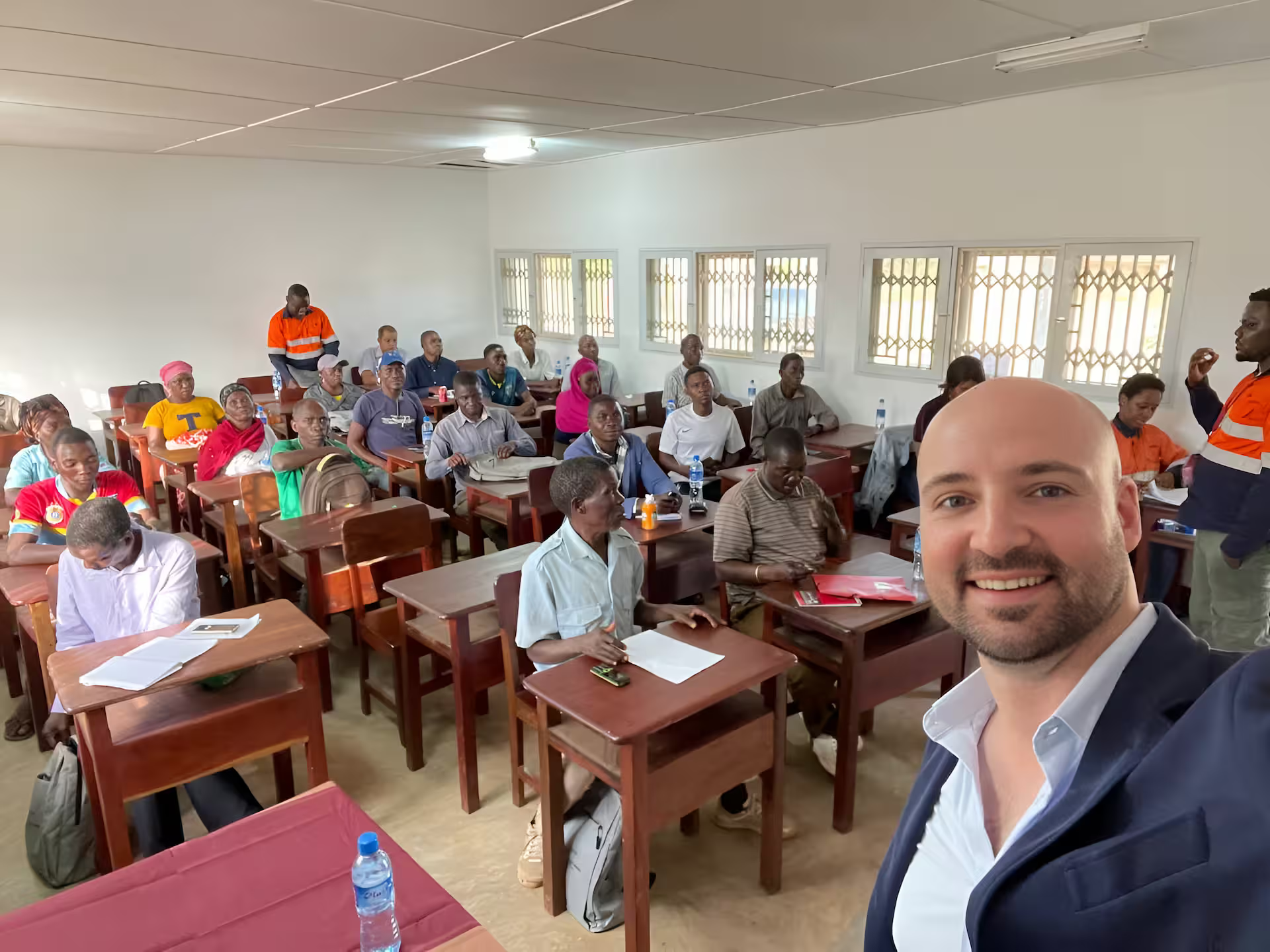
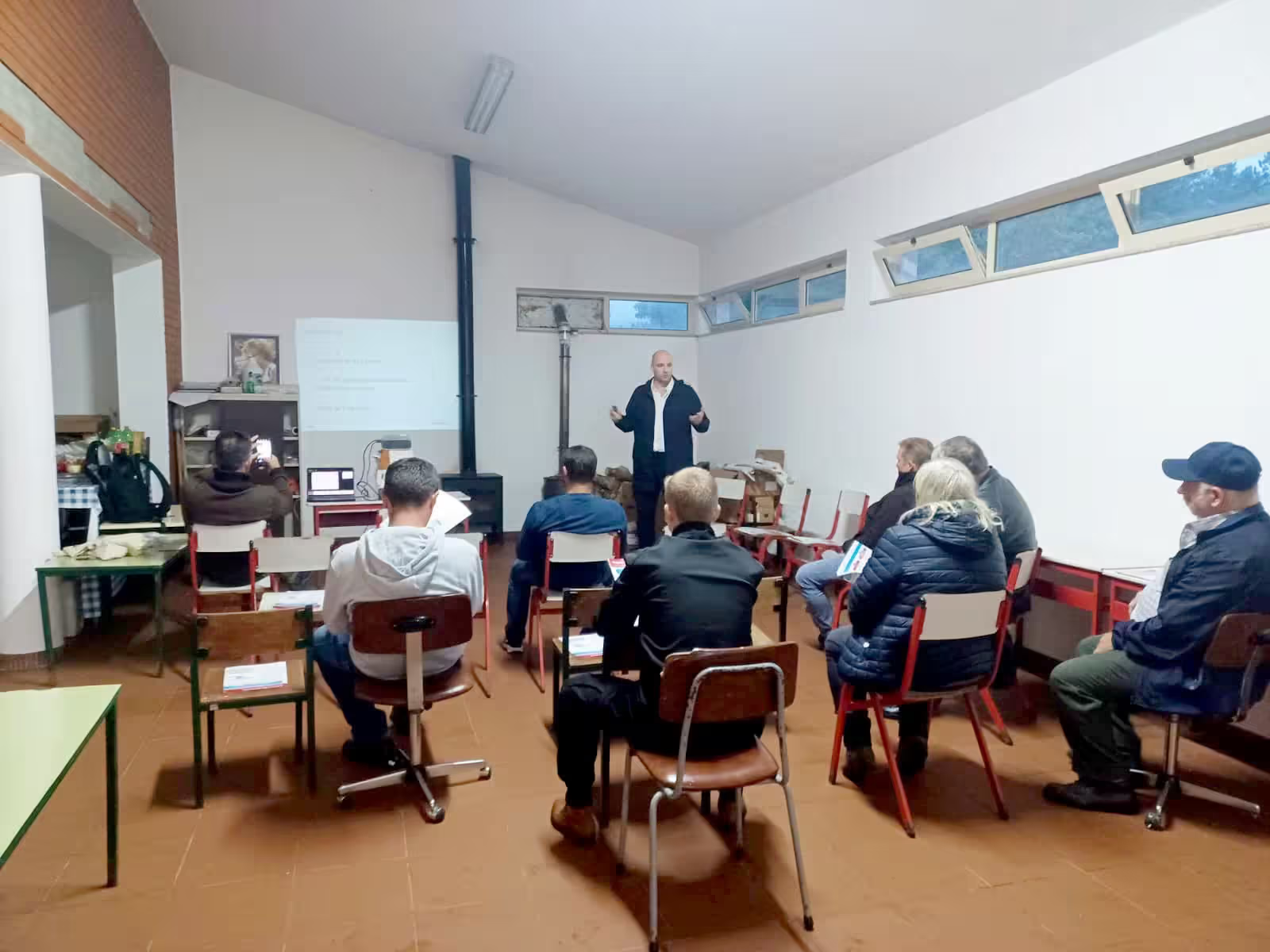
It came out of the field. Two thousand grievance claims in Mozambique, land access negotiation on a lithium project in northern Portugal, and mandates where the company-community relationship was the variable that decided whether the project moved at all.

It maps to the IFC Performance Standards, the UN Guiding Principles and FPIC requirements, and it produces the operational evidence that the CSDDD and comparable regimes increasingly ask for.

Thomas is a multi-skilled, energetic and well qualified Dispute Resolution practitioner who is dedicated to building the commitment of Portuguese lawyers to non-adjudicative Dispute Resolution. He is a pioneer in his field and a privilege to work with.

Rosemary HowellConflict resolution expert, Professorial Fellow

Working languages

English, French, Portuguese and Spanish. Mandates have taken me to Mozambique, Zambia, the Republic of the Congo, Portugal, Turkey, Tunisia, Thailand, France and the United States.

Not sure which of these fits your situation?

Thirty minutes is usually enough for me to understand what you are dealing with and tell you which of these, if any, is the right response. There is no obligation and no pitch.

Every first conversation is confidential.