
Mediators and social performance practitioners
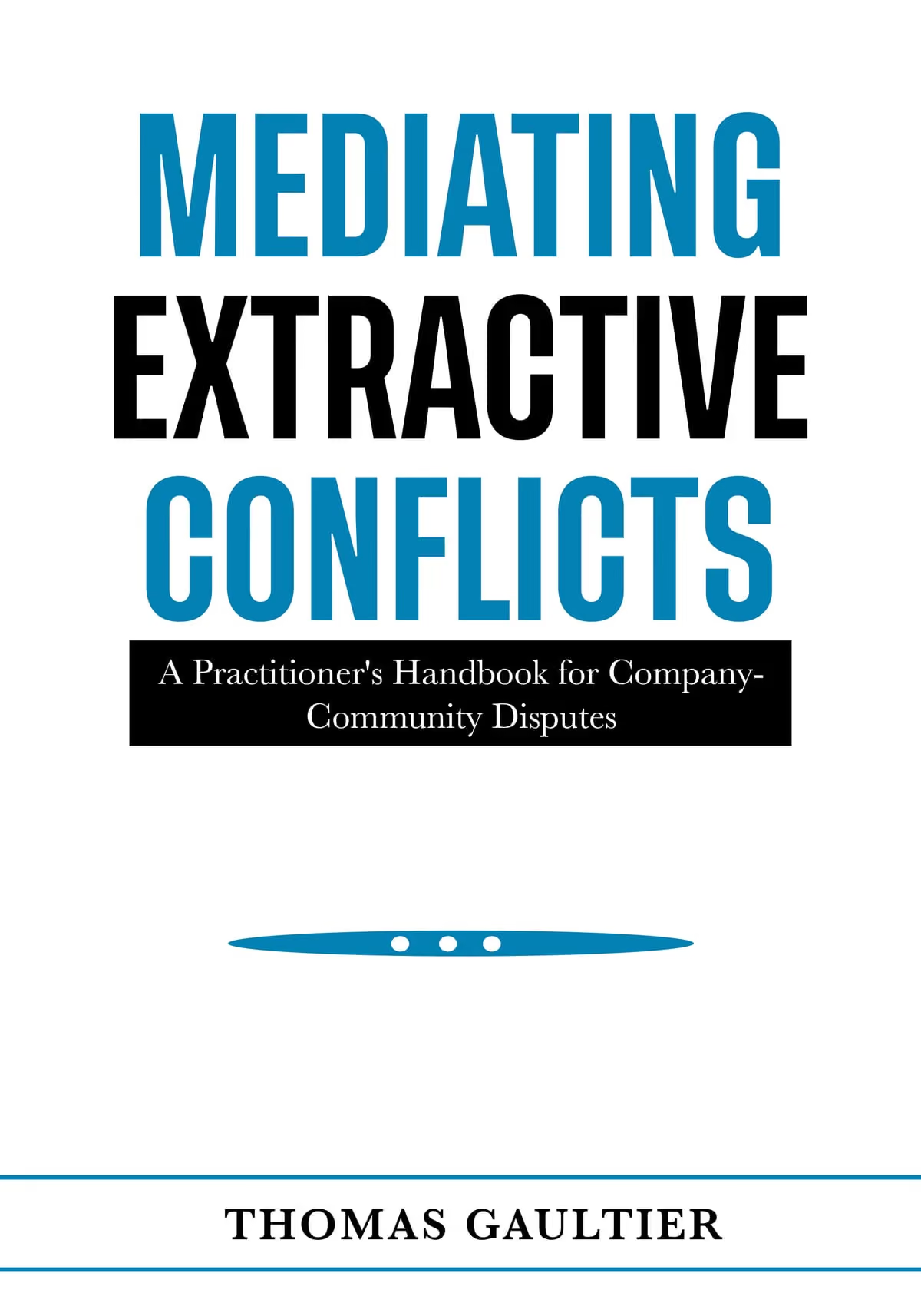
Mediating Extractive Conflicts
A Practitioner's Handbook for Company-Community Disputes
- 651 pages
- 19 chapters
- 53 visual frameworks
- ISBN 978-989-36770-0-1
When a mining project lands on a community’s doorstep, the conflicts that follow are never simple. Generic mediation training does not prepare you for this.
Power imbalances, cultural divides, historical grievances and livelihoods at stake: company-community disputes in the extractive sector demand a different approach to mediation. This handbook delivers it.
It walks practitioners step by step through the realities of company-community conflict. You will learn how to read a room where one side holds all the economic power, how to work with trauma without being consumed by it, and how to design processes that communities actually trust.
This is not theory. It is an operational manual for the hardest mediation work there is.
What is inside
Principles adapted for real power dynamics
Core mediation principles rebuilt for settings where one side controls the money, the information and the timeline.
Communication in high-tension, cross-cultural rooms
Facilitation techniques for sessions where the parties do not share a language, a worldview or a reason to trust each other.
Conflict analysis and process design
Frameworks for reading mining, energy and infrastructure disputes, and methods for designing a process both sides accept as legitimate.
Trauma-informed practice and mediator self-care
How to work with harm in the room, and how to keep doing this work for more than three years.
Impasse, resistance and breakdown
What to do when the process stalls, when a party walks, and when trust collapses mid-mandate.
After the agreement
Implementation and monitoring tools, digital and hybrid mediation approaches, case studies and ready-to-use simulation exercises.
Who it is for
- Mediators entering the extractive sector
- Community relations officers managing escalating tension
- Social performance professionals caught between competing demands
- Development practitioners supporting affected communities
Part of the same library
Every volume is built on Social Accord Architecture, written for a different side of the table.
- Social Accord Architecture
The cornerstone of the library
- The Human Shock Absorber
Community relations and social performance teams
- When the Mine Arrives
Communities, their leaders and their advisors
- Rebuild Grounds
Mediators running extractive disputes
- Social Risk for Boards
Directors and C-suite executives
- Standing in the Middle
The field companion of the library
- Navigating Human Rights Due Diligence
Compliance, legal and sustainability teams
- Grievance Mechanisms That Work
Grievance and social performance teams
- Legacy Grievances and Historical Claims
Deal teams, counsel, closure and remedy practitioners
The opening chapter
Read it before you buy it
Chapter one, in full, as a PDF. Give me an address and it arrives as a link you can open on any device. I send the chapter and nothing else unless you ask for it on the second box.
If the relationship around a project is under pressure, or heading there, let us talk.
A 30-minute call is enough for me to understand the situation and tell you honestly whether I can help. Active opposition, a social license problem, an FPIC process that needs an independent facilitator, a negotiation a community has to prepare for, or a conflict that is not public yet but will be. It makes no difference which side of the table you are on. No obligation, no generalist pitch.
Every first conversation is confidential.